Understand how Irish Lotto’s September 2026 field reduction changes its jackpot denominator and why historical probability figures need dates.
Irish Lotto Odds After the Field Reduced from Forty-Seven to Forty-Five

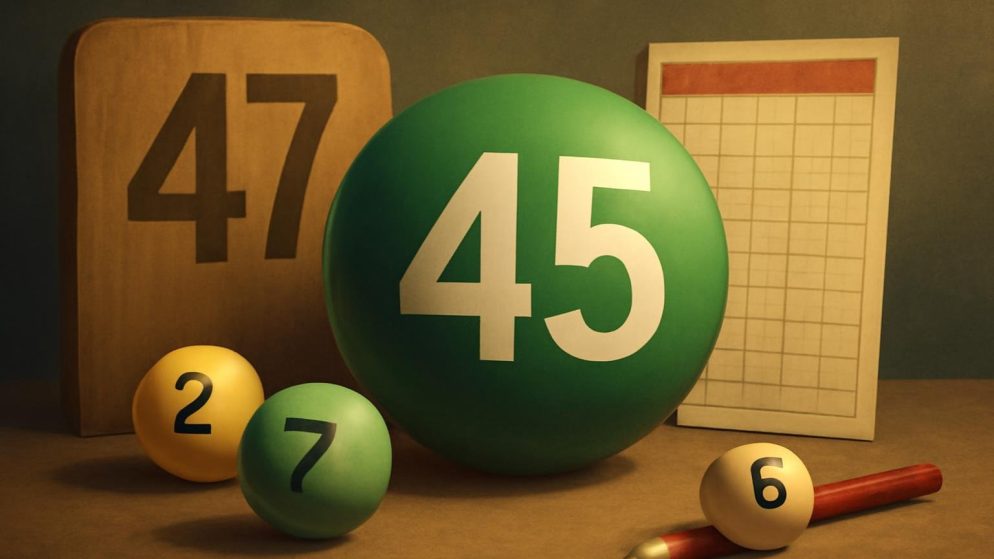
A lottery probability can become outdated even when the number of values selected stays the same. Irish Lotto changed its main field from 47 values to 45 for the September 5, 2026 draw. Players still select six different main values, but the number of possible six-number sets is smaller.
That change is the essential context for reading irish lotto odds in current and historical material. A figure from the earlier matrix can be correct for an earlier draw and unsuitable for the current format. The first check is therefore the applicable rules period, followed by the exact event and the unit being measured.
The current main jackpot count is six from 45
There are 8,145,060 different six-number subsets of a 45-number field. A particular valid standard selection has a one-in-8,145,060 chance of matching all six main values in a fair draw. Order is removed from the count because rearranging the same six values does not create a different main line.
The jackpot count concerns the complete six-main-number match. A separately drawn bonus number does not add a player-selected seventh value to that condition. Predicting extra result information beyond the main set would be a different event and would require a different label.
The earlier denominator answers an earlier question
For the previous six-from-47 format, the combination count was 10,737,573. Comparing that with the current count shows why reducing the field improves the chance of a complete main match for one fixed valid line. There are fewer possible main sets to match, while the selected set still contains six values.
The improvement comes from the rules change, rather than from a strategy that makes a particular current combination stronger than another. Within the fair current draw, all valid six-number sets remain equally likely. The field reduction changes the sample space for everyone, not the predictive status of selected personal numbers.
Historical comparisons should preserve the format
An archive spanning the change contains results generated under different permitted fields. A frequency table that merges those periods without explanation can compare values that had different opportunities to appear. Values 46 and 47 were eligible in the earlier period and absent from the later field by rule.
For a meaningful historical analysis, identify the period and matrix before calculating frequencies or match statistics. A recent publication date on a chart does not establish that its underlying data or probability model uses the current game. The assumptions need to be stated alongside the result.
Bonus categories require their own counts
Certain lower categories distinguish a main-match count with the bonus from the same main-match count without it. A reader should retain that condition when interpreting a probability. The words five matches alone may not describe the complete event that an abbreviated prize table intends.
The exact-match calculation chooses selected winning main values and selected values outside the main winning set, then accounts for the bonus requirement where applicable. It also distinguishes exactly a given number of matches from at least that many. Those distinctions remain important even though the field reduction affects the underlying counts.
One selection is not every opportunity on an entry
The basic main-jackpot denominator describes one six-number selection in one main draw. If an accepted product includes additional draw participation, identify those opportunities separately under the current conditions. Reusing the same values in another draw does not merge the draws into one enlarged main-number field.
Across independent draws, the chance of at least one success is calculated from the chance of no success in the specified sequence. A previous loss does not make the next result compensate an individual line. The applicable current matrix determines the next-draw main probability, not the player's previous history.
Keep award descriptions separate
The advertised jackpot and lower award terms are additional information. A change in potential prize amount does not itself change the combination count if the matrix remains fixed. An any-prize probability also measures a different event from the jackpot match and should not replace it silently in a comparison.
A useful historical comparison uses two labelled rows: six from 47 for the earlier period and six from 45 for the current one. Keep the denominator and effective rules period in the same row. This makes the source of the improvement inspectable and prevents a later editor from copying the old figure into a current-game paragraph merely because the game name is unchanged.
The useful reading of Irish Lotto probabilities is to preserve the rules date, six-number selection and exact prize event together. That explains both the old and current denominators without treating either as universally correct. It also shows that the improved current main-match chance comes from a smaller permitted field, not from a newly discovered number-selection method.
Read More
Posts not found
Sorry, no other posts related this article.
Recent News